
Do you generate leads but cannot onboard them?
Or they don’t stick around even after onboarding?
You might have a data management issue.
Most agencies don’t lose clients because of ads alone. Instead, they lose them because the workflows around the ads aren’t set up well.
If you already run campaigns and have clients, you now need to grow without hiring a small army.
With a focus on all the goodies you can get from agency marketing automation, this guide helps you understand how to:
- Scale campaigns without adding headcount
- Make your reporting faster and more consistent
- Automate lead routing so hot leads don’t sit in a spreadsheet
- Standardize onboarding so every client gets the same clean start
- Automate your data management processes
Also, we’ll discuss integrations that can remove busywork, because your marketing automation strategy and the data it generates work best when you build it like a system.


What does marketing automation for agencies do?
Marketing automation tools help you stop running everything by hand.
This software connects your channels and workflows, such as forms, email, CRM, reporting, and project management, to your ad platforms. This way, the next step happens automatically when something changes.
Marketing automation for agencies helps:
- Scale campaigns without hiring more people by automating repeat tasks like report pulls, alerts, and routine follow-ups.
- Speed up reporting with scheduled dashboards, client updates, and performance notifications.
- Route leads fast by tagging, assigning, and triggering follow-up the moment a lead comes in.
- Standardize onboarding by launching the same checklist, forms, folders, and tasks every time a deal closes.
What it does not replace is your strategy or creative.
Benefits of marketing automation for agencies
Marketing automation matters because it buys you time. Also, it makes your data and workflow much more consistent.
Here’s what changes in a digital agency:
- Time back each week: Most agencies end up saving hours every week. But that usually happens after you standardize reporting and stop doing custom one-off work for every client.
- More workload capacity without hiring: If you save 4 hours per week per AM, that’s basically half a workday you can spend on strategy, testing, and client communication instead of admin work.
- Faster lead response: Trigger-based follow-up can move first-touch to under 5 minutes. That one change alone can make your sales process feel way tighter.
- Cleaner multi-channel visibility: You get one place to see ads, email, and CRM outcomes. Remember that this only works if your tracking is on point.
- More consistent client experience: Every client gets the same baseline process for onboarding and check-ins.
- Better margins and pricing confidence: Performance-based pricing gets confusing if your attribution is messy. But automation can at least make the effort and outputs easier to track.
Main agency marketing automation workflows
Most teams are not fully automated yet. In Ascend2’s 2024 survey, only 9% said the customer journey is fully automated, while 59% said it’s only partially automated. That says there’s still a lot of manual work that agencies can remove.
These are the workflows that make a real difference in day-to-day agency work:
Reporting automation
Reporting automation pulls performance numbers into dashboards on a set schedule, so you’re not exporting spreadsheets every week.
It can send weekly or monthly reports and flag other markers like budget pacing, sudden dips, or surprise wins.
The best way to go about this is to have standard templates, so every client gets the same clear format without you rebuilding reports.
Lead capture and lead routing
This grabs leads from forms, landing pages, chat, and ads, then tags them right away (source, service, location, budget, etc.).
After that, it sends the lead to the right pipeline or person and creates follow-up tasks automatically. This keeps leads from getting lost and prevents delays that make prospects lose interest.
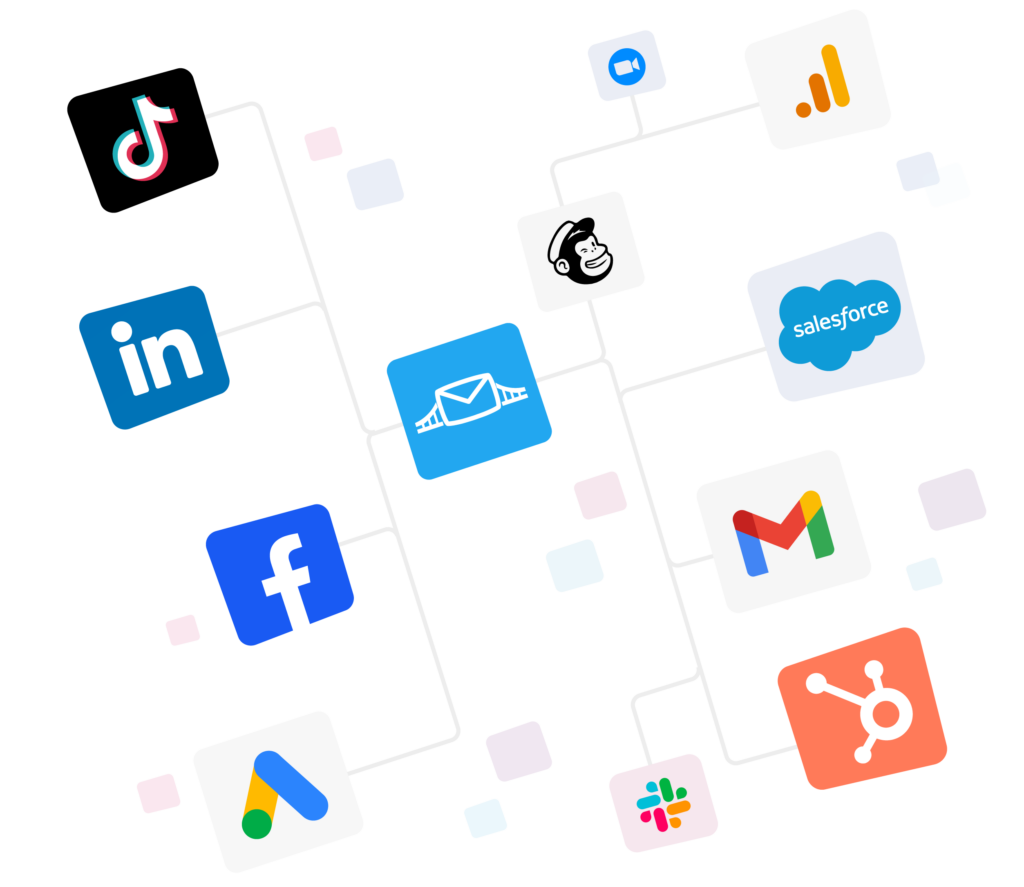
Connections such as Facebook ads, Google lead ads, or TikTok Lead Generation integrations can help you automate these flows in just a few clicks.


Speed-to-lead follow-up
Once you have generated a lead for your agency, you need to follow up with them.
This workflow sends out a reply the second a lead comes in with an email or SMS, plus a book-a-call link and reminders.


Depending on your email provider, you can add escalation rules or similar email notifications.
For instance, pinging a manager if nobody responds within 30 minutes. Faster response always translates to more booked calls and fewer dead leads.
Nurture sequences
Nurture sequences keep leads warm when they’re not ready yet. You can run simple sequences, then branch based on what they do: open, click, book, no-show, or ignore.
Re-engagement flows help restart cold leads without your team manually chasing people.
CRM hygiene
Your agency CRM should have a system that automatically creates and updates contacts and deals, logs key actions (like form fills and booked calls), and moves deal stages when triggers occur.
That makes reporting accurate and keeps your sales and delivery aligned with one another.
Client onboarding
Onboarding automation begins the same process every time a client signs. It can send intake forms, request access, create project tasks, and set up folders, docs, and checklists with naming rules.
A first-week status email also draws in fewer of those just checking-in messages because your client sees the progress on their own.
Internal ops
Internal ops automation sends alerts in Slack or Teams when something changes, like a lead is booked, a campaign breaks, or tracking is off.
It can run quick checks for missing UTMs, broken forms, or missing conversion tracking, then create fix tasks. It can also set renewal reminders and prep results recap tasks.
Types of agency marketing automation software
For agencies, marketing automation software is a set of software types that handle different parts of the work. Anything from lead flow to follow-up, reporting, data cleanup, and internal delivery. There are also a lot of options out there, which is why it helps to think in categories first.
| Type | What it automates | Main features agencies care about | Best fit when | Common watch-out |
| Marketing automation platforms | Multi-step campaigns and nurture | Segmentation, triggers, journeys, and personalization | You need consistent follow-up at scale | Takes clean data and planning |
| CRM and sales automation | Lead routing and pipeline updates | Assignment rules, stages, tasks, and activity logging | Leads are slipping, or follow-up is slow | Teams skip CRM hygiene |
| Messaging automation | Fast mobile follow-up | Text confirmations, reminders, short sequences | You want faster response and show-up rates | Compliance and opt-in rules matter |
| Social media automation | Scheduling and publishing | Calendars, approvals, posting queues | Many clients, lots of posts | Still needs human quality control |
| Paid media automation | Rule-based ad ops | Budget pacing rules, alerts, and basic optimizations | You manage many ad accounts | Can optimize the wrong goal |
| Reporting and analytics automation | Reporting at scale | Dashboards, scheduled reports, anomaly alerts | Reporting takes too much time | Bad tracking = bad reports |
| Integration and workflow automation | Moving data between tools | Connectors, data sync, trigger workflows | You have a multi-tool stack | Breaks when tools change APIs |
| Customer data platforms | Unifying customer data | Identity stitching, unified profiles, audience building | Data is scattered across systems | Setup and governance are real work |
| Client onboarding and ops automation | Delivery and client experience | Checklists, templates, approvals, and status updates | Onboarding is inconsistent | Needs ownership to stay updated |
Now, let’s have an in-depth look:
Marketing automation platforms
It’s built to run automated journeys like welcome flows, nurture sequences, and behavior-based follow-up based on opens, clicks, site visits, form fills, and so on.
CRM and sales automation
This category focuses on managing leads and deals. It routes leads to the right pipeline or rep, updates stages, logs activities, and keeps sales follow-up from slipping through the cracks.
Messaging automation
This covers SMS and other mobile-first messaging. It’s used for fast confirmations, reminders, no-show recovery, and short follow-ups that people actually read on their phones.
Social media automation
This category handles publishing, scheduling, and sometimes inbox management. It’s less about growth hacks and more about keeping posting consistent across clients without burning hours.
Learn more about running ads for clients on Facebook here.
Paid media automation
This category automates parts of ad ops. Rule-based budget pacing, alerts, creative rotation triggers, and basic optimizations. It won’t replace a strategist, but it can reduce several workflows that were being done manually.
Reporting and analytics automation
This is dashboards, scheduled reports, automated data pulls, and performance alerts. The goal is to stop exporting CSVs and rebuilding the same report every month.
Customer data platforms
A CDP (customer data platform) collects and unifies customer data from multiple sources into a single profile, so targeting and personalization don’t rely on messy, scattered data.
Client onboarding and agency ops automation
This is internal delivery automation: onboarding checklists, task templates, approvals, client status updates, and handoffs between teams. It’s how you standardize service across accounts.
Integration and workflow automation
This is the connector layer that moves data between tools. You need a provider that links your apps and automates lead data flows across systems.
How to implement marketing automation for agencies: A step-by-step guide
Step 1: Pick the workflows that matter first
Trying to automate everything at once without turning them into a stack of disconnected systems?
Start with 2–3 workflows tied to money and time, like lead routing, reporting, and onboarding, then expand once those are stable.
Step 2: Connect lead sources
Your leads come in from Meta, LinkedIn, Google, and landing pages. If they sit in inboxes right after they come in or get copied into a CRM late, they lose quality.
Use LeadsBridge Lead Sync to move leads from lead forms directly into your CRM or email system in real time, so follow-ups run immediately.


Step 3: Standardize fields and tagging before you scale
Set one field map for name, email, phone, source, service, and location, then apply that mapping across every client’s forms as you build your integrations.
Step 4: Set speed-to-lead follow-up rules
Even good leads go cold when no one responds quickly.
Once your integrations push the lead into your marketing system, trigger an instant confirmation and a short follow-up sequence from there.
Step 5: Route leads to the right owner and pipeline
Route based on rules like location, service line, or budget. Automated data bridges can send leads into the right CRM pipeline, and they can also send the same lead to multiple destinations when needed. For example, CRM plus a spreadsheet or email list.
Step 6: Close the loop with conversion syncing
Ad platforms optimize on what they can see, and they often can’t see offline sales, qualified leads, or closed-won deals.
Use LeadsBridge Conversions Sync to push online and offline conversion events back to ad platforms like Meta Conversions API or TikTok. This way, your optimization is based on real outcomes.


Step 7: Keep audiences updated automatically
Retargeting and exclusions fall apart when audiences are built by hand once a month.
Sync CRM segments to ad platforms as always-fresh audiences, so you can retarget, upsell, or exclude customers without manual list uploads.


Step 8: Template it so onboarding stays consistent
Does every new client become a custom project? Turn your best setup into a repeatable onboarding checklist, then reuse the same integration patterns client-to-client so you can scale without adding headcount.
FAQs
1. How to automate a digital marketing agency?
Start with the biggest time-wasters: lead capture and routing, follow-up sequences, and reporting. Connect your lead sources to your CRM in real time, trigger instant replies, and standardize onboarding checklists so every client setup runs the same way.
2. Does my small agency need marketing automation?
Yes, if you want to grow without hiring fast. Even basic automation (lead sync, simple follow-ups, scheduled reports) can save hours each week and stop leads from getting missed.
3. How do agencies integrate marketing automation for better results?
They connect tools so data moves automatically instead of being copied by hand. The key is clean field mapping, clear routing rules, and conversion syncing back to ad platforms so it can optimize for the outcome that matters to your agency.
Final thoughts
Done right, your agency marketing automation becomes a system that creates consistency. Leads move fast, reporting stops eating hours, and clients feel like you’ve got control even when you’re managing a lot of accounts.
Discover LeadsBridge solutions for marketing automation.