Buying a car is different from buying most other things. It costs a lot, many people use financing, and shoppers want to feel confident before they commit.
That means the buying journey usually has more steps and more research than a normal retail purchase.
For dealerships, the goal is to be easy to find, quick to respond, and clear about pricing and next steps.
In this post, we’re going to walk you through the automotive customer journey map to car purchase and how to increase lead generation and conversions for your dealership.
Also, we’ll talk about strategies and tools that can help you automate your data management when mapping your automotive customer journey, such as:


Why are the automotive customer engagement and the automotive customer lifecycle unique?
Car buying behavior is not consistent even with other “major” purchases, such as a new oven or television. This is a high-value, high-cost purchase that often requires financing and, ideally, lasts someone years.
There are different audience segments that can impact the automotive customer lifecycle and buying behavior as well.
Some customers, for example, care about status, style, or prestige; they may be likely to trade in their car every few years to get the latest model. Others prioritize reliability and safety, and may only want to upgrade once extensive new safety features have been launched.
Understanding your target market is important, as these customers are about to spend tens of thousands of dollars with the salesperson who can convince them they have what they need.
Research is another significant factor (though not always quite as much as you’d think, which we’ll discuss in a minute), and understanding what your audience needs and following up at the right time are key.
The automotive customer journey: What we know
The automotive customer journey aligns with your standard sales funnel.
Let’s take a look at each stage of the customer journey to car purchase and automotive customer engagement.

1. Awareness
This is when shoppers first notice your dealership. About 95% of car shoppers use online sources to research vehicles, instead of starting at a dealership. So it’s important to consider organic, to-funnel content alongside your ads.
Another simple strategy is to use Google Ads to target audiences who are actively researching car sales to generate awareness.
Do this by showing up in local search with a complete Google Business Profile (hours, photos, phone number, directions).
Then, ask happy customers for reviews and respond to them.
Also run some search ads for high-intent terms. For example, used SUV near me, lease deals, 2026 model + city.
You must keep your message focused on what buyers want most, such as price clarity, availability, and ease.
2. Research
This is where shoppers compare options, prices, payments, and reviews. Some people start early, but many decide faster than dealers expect, so you need to respond while interest is high.
Keep in mind that all customers are different.
Some may only consider a newer model of what they already have, while others will read reviews of different makes and models extensively.
If this is the case, they’ll often use sites like Edmunds or Kelley Blue Book to assess factors like safety, resale value, mileage, and more.
To accommodate potential customers at this stage of the automotive customer lifecycle, it’s crucial to have plenty of information on your site. You want to be as transparent as possible about features and pricing, and encourage people to get in touch for a free, no-obligation call.
Additionally, you can add these to your website:
- Make inventory pages actually useful with genuine photos, key features, warranty info, and transparent pricing.
- Add simple tools like payment estimator, trade-in estimate, and “value my car.”
- Make it easy to contact you from every vehicle page (call, text, chat, and a short form)
3. Consideration
This is when a shopper becomes a lead (they fill out a form, call, text, or message you).
As soon as a lead signs up for more information, you want to get in touch and stay in touch with them. The first salesperson who does may very well be the one who gets the sale.
Here’s a quick checklist of what you need to do:
- Respond fast. The first helpful response often wins.
- Offer the next step clearly: “Want to schedule a test drive today or tomorrow?”
- Use lead-syncing so all leads flow into your CRM and the right salesperson sees them right away.
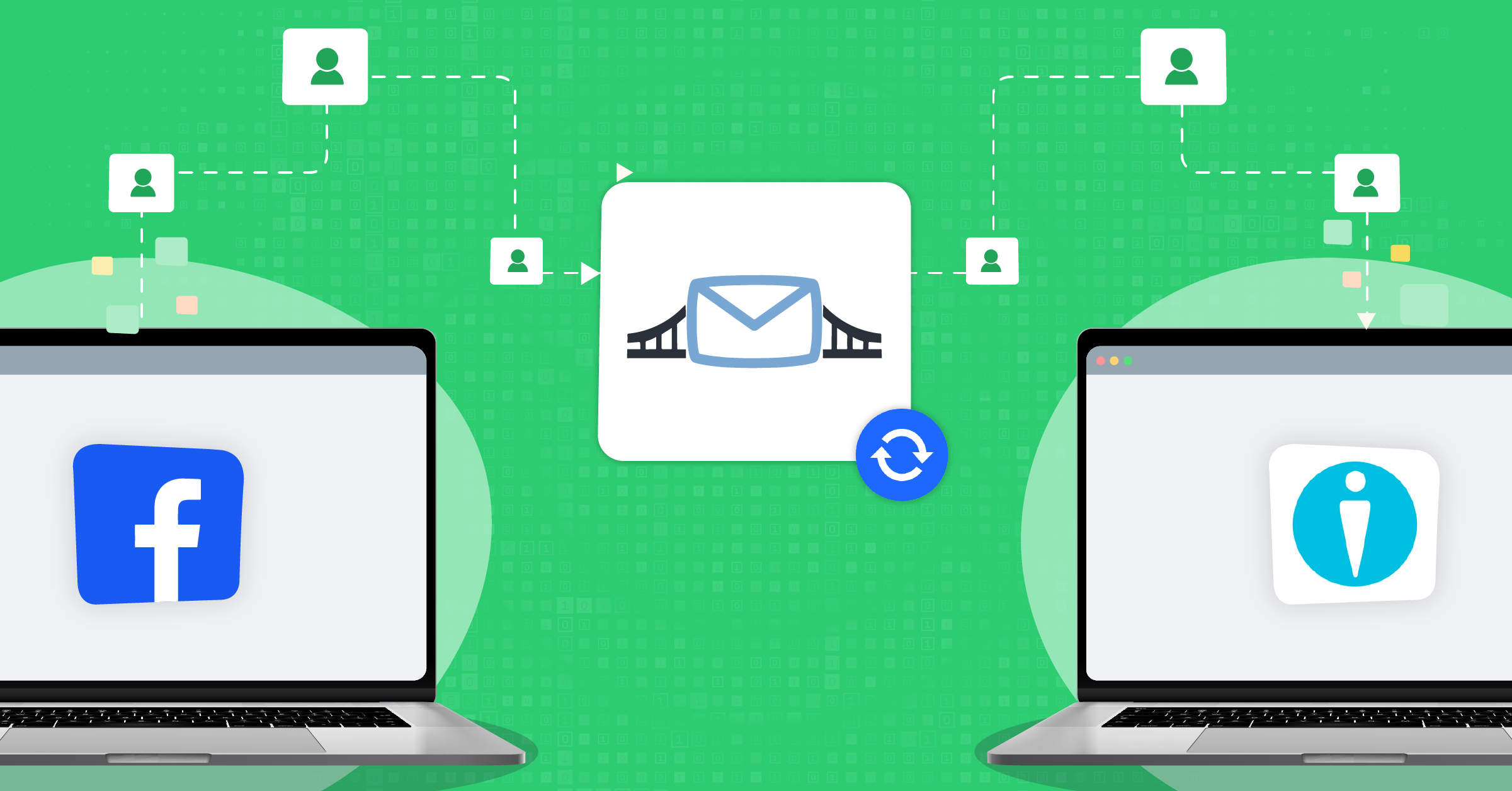
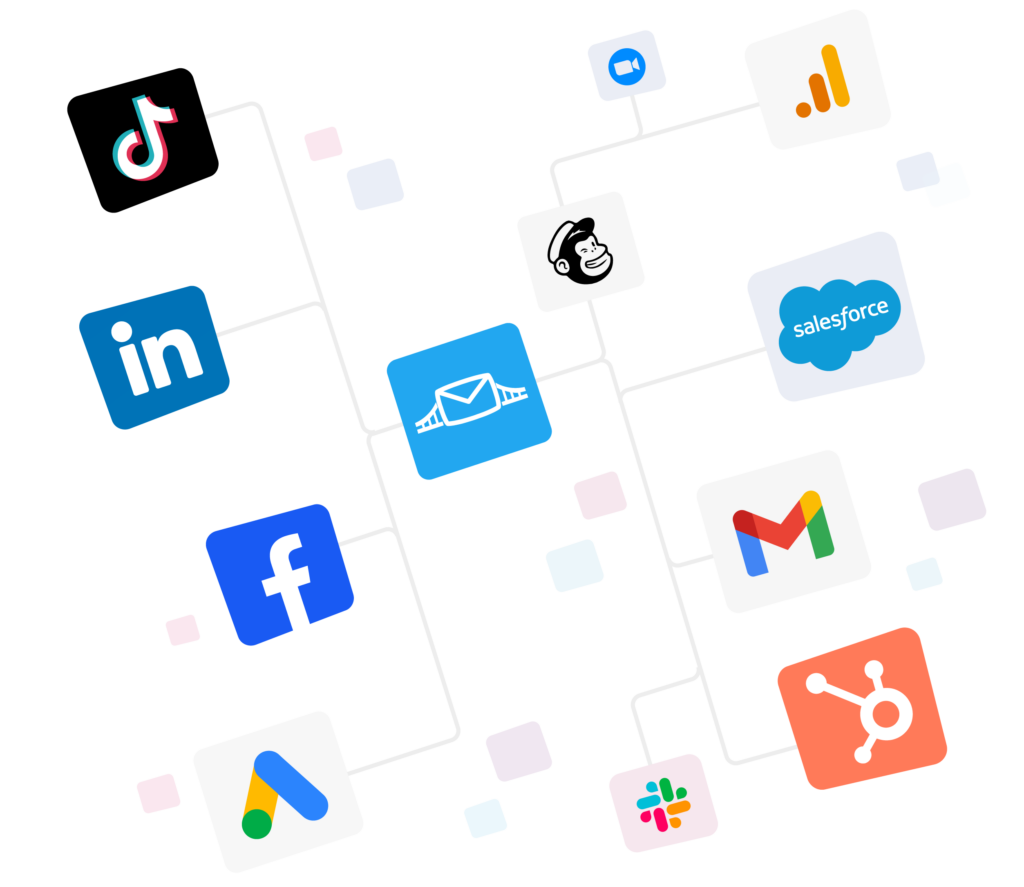
This is where data automation becomes essential for dealerships. LeadsBridge has automotive solutions included with our lead syncing tools, which transfer your leads from multiple platforms to your CRM and email software.


This could include Facebook Ads, Google Ads, TikTok Ads, and third-party automotive platforms.
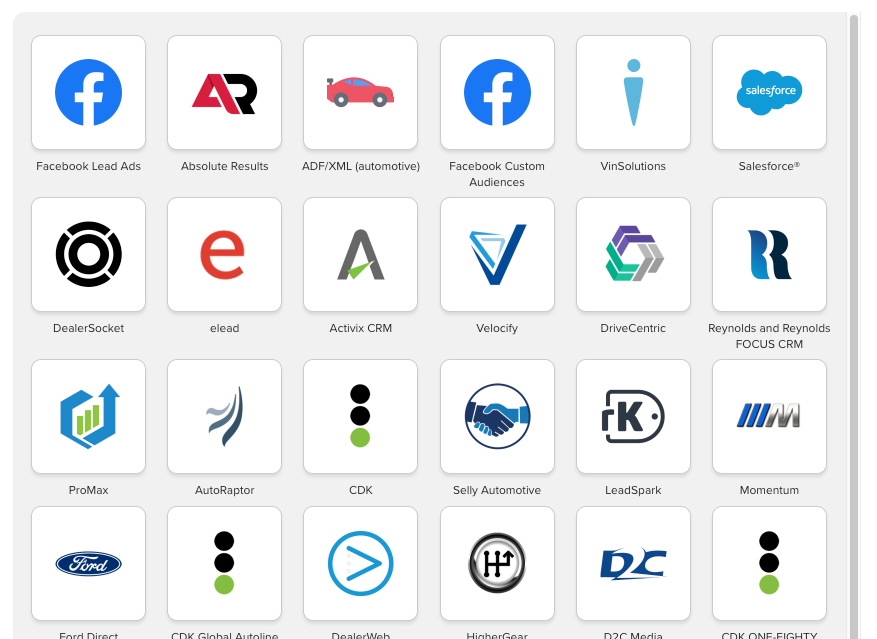
Your sales team will immediately see new leads and be able to contact them right away, making this a must-have customer lifecycle management tool. Try to get them in for a test drive as soon as possible so someone else doesn’t beat you to it.
A survey found 1 in 6 skipped the test drive, and many test-drove only one vehicle. Most shoppers still want a test drive, but more people skip it than before.
Once automotive customers are at this stage of the car-buying journey, it’s important to follow up frequently. You’ll want to discuss pricing and promotions, and try to get them back in or pre-qualified with financing.
4. Purchase
This is where deals stall if the process you have set up for your leads feels slow, confusing, or comes with a surprise fee. At this stage, you need to:
- Be clear about the “out-the-door” price (fees, taxes, registration) as early as you can.
- Let customers do steps online before they arrive (credit app, document upload, appointment scheduling).
- Offer to pre-fill paperwork to cut time in-store.
Cox Automotive reported that buyers who completed key steps online saved time at the dealership (about 42 minutes on average in one release). It means that the effort you put into your strategy can convert a lot of the leads you have collected.
Consistent follow-up leads to the purchase, which you can enable with a dedicated automotive CRM and customer lifecycle management tool. Then, use automated data bridges to keep all your data up-to-date in real time across multiple platforms.
With automation, you can get in touch with your lead, use remarketing to remind them you’re there, and automate email campaigns to stay at the forefront of their mind through email. You can offer leads, updated deals, and new bonuses that come with purchasing.


Also, train your team to explain financing in plain language so your leads don’t feel they are getting scammed, which can cause them to pull away last minute.
5. Loyalty
With a sale, the automotive customer lifecycle isn’t actually over. It’s the start of the next sale.
While the frequency of purchase in the auto industry is much lower than in many others, plenty of customers will return years later to purchase another car from the same salesperson and dealership. They’ll also refer others to you if happy, so customer satisfaction in the automotive industry is crucial long-term.
Send email marketing campaigns to past customers with high customer satisfaction survey ratings, reminding them of referral programs that you have.
You can also use remarketing campaigns through LeadsBridge several years after their purchase, or to alert customers of models with major new additions like a significant mileage decrease or enhanced safety features.
Dynamic ads can be used to show customers cars that they’d be most likely to purchase based on their history. However, the platform needs your CRM data to be able to target these users. You can do this best using automated custom audience integrations.

You worked hard for the first sale; use the momentum of automotive customer engagement and the right tools to stay in touch for additional sales down the line, too.
How to increase automotive email customer engagement: Best practices
Not getting enough from your email campaigns even though you have covered all the basics? You might just need to tweak a few things.
Here are some best practices you can follow to increase automotive email customer engagement.
- Use clicks instead of opens
Open rates are messy now because Apple’s privacy features can inflate or hide opens. Judge success by clicks, replies, and booked appointments.
- Send fewer emails, but make them about the person receiving them
The rule of thumb is that one email, one objective. For example:
- Your trade-in estimate plus next steps
- This car’s price changed
- Your financing pre-check is ready
- Your test drive: confirm time
- Segment by intent
Don’t send out the same message to everyone. And no, you shouldn’t be writing to every single person individually either. Instead, use 4 buckets for:
- New lead (first 7 days) should get fast replies, 2–3 short emails at most.
- Active shoppers (viewed 3+ cars) are usually interested in price drops, ‘compare trims,’ appointment invites, etc.
- Cold lead (14+ days no click) could be brought back with one ‘still looking?’ that includes one strong offer. After this, you should pause.
- The owner and service customer can be interested in receiving service reminders in addition to trade-in equity updates.
- Write like a text message
Your message should be written in short sentences with one link and one button. For example, if the subject says “Still interested in the blue RAV4?” the body should include 2–4 lines max and a “Book a drive” link.
- Make unsubscribing easy
Most claim it is easy to unsubscribe from their lists, but it actually is not. And when that happens, they are going to report and block you, leading to more spam complaints.
That’s why both Gmail and Yahoo suggest one-click unsubscribe in bulk email.

- Add one trust proof per email when possible
Your trust element can be a customer quote, a short “what happens next” list, or a 30-second walkaround video link. Choose based on the context of the email and the stage the receiver is at in your funnel.
- Use “3-email rules” after a lead submits.
This alone can lift the response. Here’s a high-performing formula you can use:
- Instant communication: “Got it—this car is available / not available. Want a quick call or text?”
- Emails sent 2–4 hours later: 3 bullet answers (price, miles, warranty) + book link
- Next morning follow-ups: “Two times that work today” (give two choices)
Again, you can do this accurately if you have an automated data stack.


Final thoughts
In 2026, most shoppers start online and expect fast, clear answers. Your dealership doesn’t need gimmicks. It needs speed, transparency, and follow-through.
If you make it easy to buy and hard to get surprised, buyers will reward you with trust, reviews, and repeat business.
Interested in improving how you capture and follow up with leads? Make sure your ads, forms, CRM, and email tools all work together so no lead gets lost.
Check out our automotive solutions for lead management and data sync in real-time.