
TL;DR
- Mailchimp is easier to learn and cheaper for basic email marketing and comes with a free plan and works well if you just need to send newsletters and simple automated sequences.
- ActiveCampaign costs more but gives you a lot more firepower: deeper automation, a built-in CRM, and AI tools that touch nearly every part of the platform.
- For a small business sending occasional emails, Mailchimp probably makes more sense.
- If marketing automation and sales tracking are central, ActiveCampaign is worth the extra cost.
If you’re choosing an email marketing platform, you’ve probably run into these two names more than any others.
Mailchimp is the go-to for automating small business processes in a simple manner.
While ActiveCampaign is the pick for teams that want automation and CRM features baked in.
Both of them do email marketing well, but they’re built for different jobs, which you can decide on based on your marketing automation strategy.
This guide breaks down how ActiveCampaign and Mailchimp compare on automation, AI features, pricing, and scalability, so you can figure out which one actually fits your business.
- TL;DR
- A quick look at Mailchimp and ActiveCampaign
- ActiveCampaign vs. Mailchimp at a glance
- ActiveCampaign vs. Mailchimp: Email marketing
- ActiveCampaign vs. Mailchimp: AI features
- ActiveCampaign vs. Mailchimp: Pricing
- ActiveCampaign vs. Mailchimp for small businesses
- How to automate lead data transfers into Mailchimp and ActiveCampaign workflows
- FAQs
- Final thoughts
Also, we’ll cover how you can integrate these tools into your existing marketing stack using automated data bridges.


A quick look at Mailchimp and ActiveCampaign
Mailchimp launched in 2001 as an email tool and has grown into an all-in-one marketing platform for small businesses. It’s known for being approachable, with a free tier and a simple drag-and-drop editor that doesn’t require much of a learning curve.
ActiveCampaign came along just a couple of years later. It’s part email marketing tool, part CRM, part sales automation platform. So it focused on businesses that want to map out detailed customer journeys and connect marketing directly to sales.
ActiveCampaign vs. Mailchimp at a glance
| Mailchimp | ActiveCampaign | |
| Ease of use | Very simple, minimal learning curve | Steeper learning curve, though AI tools now help offset that |
| Marketing automation | Solid for basic sequences and journeys | Advanced automation across email, SMS, and website triggers |
| CRM & sales tools | Basic tagging and notifications only | Full CRM with pipeline and deal tracking |
| AI features | A handful of generative and optimization tools | AI built into nearly every workflow, from segments to full campaigns |
| Pricing | Free plan available; paid plans start around $13/month | No free plan; paid plans start around $15/month |
| Integrations | 330+ native integrations | 1,000+ native integrations, though some are plan-gated |
ActiveCampaign vs. Mailchimp: Email marketing
Both platforms cover the basics well, offering:
- Drag-and-drop email builders
- Hundreds of templates
- A/B testing
- Mobile previews
Their main difference is in how far you can take an automated sequence.
Mailchimp’s automation is journey-based and easy to set up, but it’s much more limited in lower-tier plans, where you get a handful of automation steps unless you upgrade. This can be a problem if you want more than a basic welcome series.
ActiveCampaign lets you build automations with branches, triggers, and conditions. Also, it shows you the whole thing as a visual map.

That’s useful once your email strategy gets more complex, but it also means there’s more to learn upfront.
ActiveCampaign goes way beyond email with SMS and WhatsApp messaging. That’s also something Mailchimp doesn’t offer natively.
For businesses that just want to send newsletters and product updates, Mailchimp is great. But if your business needs multi-step and automated nurture campaigns, ActiveCampaign offers much more. Either way, automation can help streamline your follow-up.


ActiveCampaign vs. Mailchimp: AI features
AI is another gap between these two platforms that has widened the most over the past couple of years.
Mailchimp offers generative text and image tools, content optimization suggestions, and a set of AI-assisted “flows” built on templates. It’s helpful, but it leans on pre-built structures rather than building something custom from a prompt.
ActiveCampaign has pushed AI into nearly every corner of the platform. You can generate a full brand kit from your website, build multi-step automations by describing what you want, create detailed audience segments, and even get predictive lead scoring and deal-win probabilities.


It’s a much deeper AI toolkit, though it’s worth noting some of these features are still labeled as beta, and generating a full automation can take a few minutes rather than happening instantly.

Is AI-assisted automation a priority for you?
Then, ActiveCampaign is currently the better choice. But if you just want quick help writing subject lines or email copy, Mailchimp’s lighter-weight tools should be enough.
Learn more about Mailchimp alternatives here.
ActiveCampaign vs. Mailchimp: Pricing
Mailchimp pricing
Mailchimp is the cheaper option for basic email marketing, and it’s the only one of the two with a free plan (capped at 500 contacts and 500 monthly sends, without automation or A/B testing).
Paid plans start around $13/month for entry-level features, with a mid-tier plan around $20/month unlocking AI tools, advanced segmentation, and more automation steps.

ActiveCampaign pricing
ActiveCampaign skips the free tier but includes more out of the gate on its entry plan, which starts around $15/month. Even at that level, you get access to CRM features, AI tools, and branching automations, though automation steps are limited until you move up a plan.

Mid-tier plans run in the $49-$79/month range and add unlimited automation actions, landing pages, and sales features. Add-ons like SMS, WhatsApp, and pipeline management cost extra.
The bottom line: Mailchimp is cheaper if you mainly need email marketing. ActiveCampaign costs more but bundles in CRM and sales automation that would otherwise require a separate tool.
ActiveCampaign vs. Mailchimp for small businesses
Marketing automation for small businesses is a must-have. So, picking between the two really comes down to how complex your marketing needs are today, and how fast you expect them to grow.
Choose Mailchimp if you:
- Need a free plan to get started
- Want the simplest possible setup with minimal learning curve
- Have a small team that needs several user seats without extra cost
- Want an all-in-one hub for email, landing pages, and social posts
Choose ActiveCampaign if you:
- Rely heavily on marketing automation to drive growth
- Need a CRM with sales pipeline tracking built in
- Want AI woven into your day-to-day workflows
- Plan to run detailed, multi-path customer journeys
| Mailchimp | ActiveCampaign | |
| Best for | Solo founders and small teams starting out | Growing businesses that need automation and CRM |
| Learning curve | Low | Moderate |
| Room to scale | Limited without switching plans or tools | High, with CRM and sales automation built in |
Choosing a tool is one thing, getting more subscribers is another. So it’s important not to mistake the two. Here’s more on how to grow your email list.
How to automate lead data transfers into Mailchimp and ActiveCampaign workflows
Whichever platform you choose, getting the most out of it usually means connecting it to the rest of your marketing stack, especially your ad platforms.
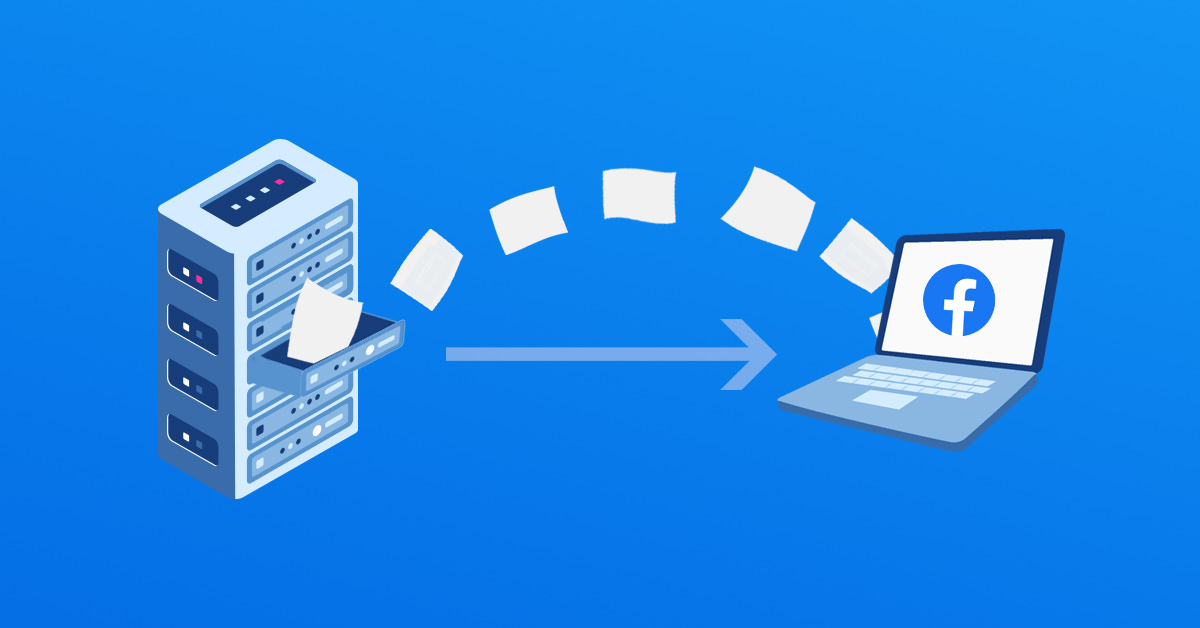
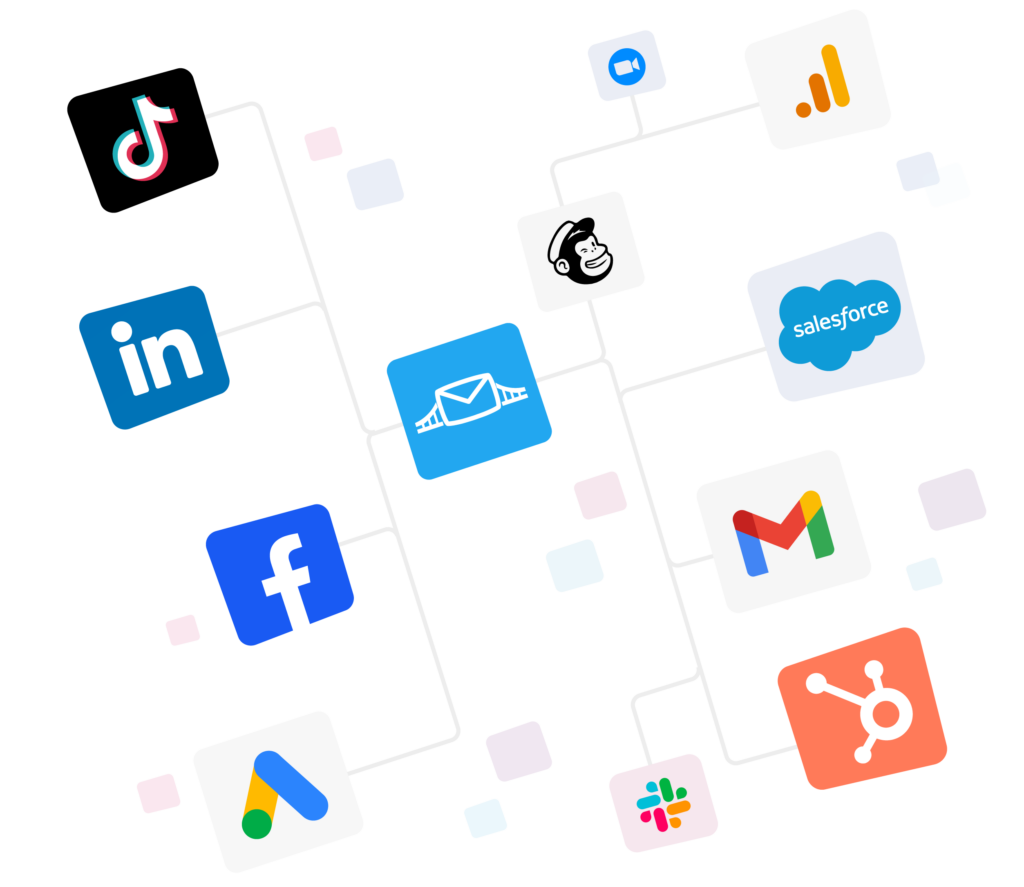
LeadsBridge integrations for Mailchimp and ActiveCampaign let you sync leads in real time from Meta, Google, LinkedIn, and TikTok directly into your email marketing tool. This way, new contacts land in the right list or automation the moment they convert.

This is especially useful if you’re syncing Facebook ad activity with your email platform. LeadsBridge can help keep your Custom Audiences updated with contact data from Mailchimp or HubSpot, so your ad targeting and email follow-up stay connected instead of living in separate silos.


FAQs
What is the main difference between Mailchimp and ActiveCampaign?
Mailchimp is built to be an easy-to-use email marketing tool with light automation and a free tier. ActiveCampaign is built to be powerful with a combination of tools to accommodate email marketing, marketing automation, and CRM retargeting flows. It also offers AI features spread throughout. Mailchimp suits straightforward email workflows, while ActiveCampaign suits businesses that want automation and sales tracking in one place.
Which platform is better for small businesses?
It depends on where your business is right now. If you’re just getting started and want something free and easy, Mailchimp is the safer bet. If you’re already sending regular campaigns and need deeper automation, segmentation, or CRM advertising, ActiveCampaign gives you more room to grow, even though it costs more upfront.
Final thoughts
There’s one data point worth keeping in mind either way. Email marketing still delivers one of the highest returns of any marketing channel, with SMBs seeing an average return of roughly $36 to $42 for every $1 spent in 2026.
That ROI holds up whether you’re using a simple tool or an advanced one, so the bigger question is really which platform fits how your team works.
Ready to connect your email marketing tool to the rest of your stack? See how LeadsBridge integrates with Mailchimp or explore the ActiveCampaign integration.