
Using instant forms for your Meta lead generation campaigns can make your life easier in a few simple ways.
First, they’re convenient. People can fill out the form right on Meta platforms without leaving the app. Meta can also auto-fill some of their info, so it’s faster for them and easier for you to collect data.
But when we look at top-performing instant forms, most are made by skilled marketers. Competing with them means you need a solid system behind your ads.
Managing and following up with leads is key.
With automated data bridges, you can get instant alerts whenever a new lead comes in from your Meta ads, especially when you connect and automate your campaigns properly.
- What are Meta instant forms?
- How to create an instant form on Facebook
- How to create an instant form on Instagram
- How to test your Facebook instant form (with Meta + LeadsBridge)
- Benefits of using Instagram CRM integrations
- Instant form examples on Facebook and Instagram
- Benefits of integrating Meta instant forms with LeadsBridge
- FAQs
- Final thoughts
This guide will walk you through creating Meta instant forms, show a couple of instant form examples, and explain how to integrate them with tools like LeadsBridge for better results.


What are Meta instant forms?
Meta instant forms are powerful tools used in Meta advertising to easily collect leads directly from users’ social media feeds. They let people show interest in your business with just a few taps, and the results speak for themselves.
This can also be done without leaving the app, which helps reduce friction. These forms are mobile-friendly, load fast, and auto-fill using information from the user’s Meta accounts (Facebook, Instagram, etc.).
On top of that, Meta now offers lead verification options, including SMS confirmation and work email filtering, which help make sure the info people submit is actually accurate.
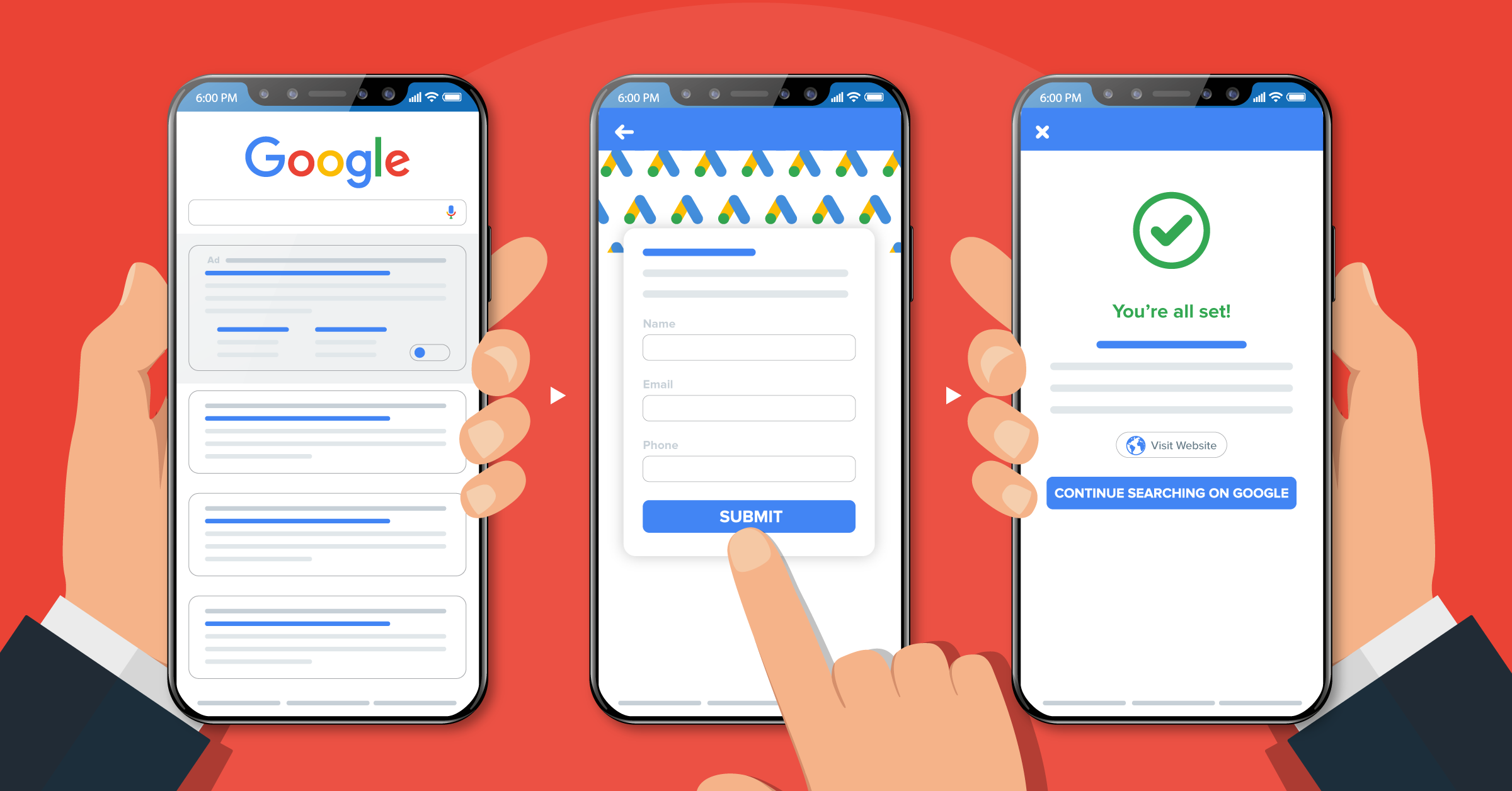
How do they look? Take a look at this instant form example:

Anatomy of an instant form
When you set up a lead campaign in Ads Manager, you can select instant forms to collect leads. These are simple to use. You can set up different types of instant forms depending on your goals.
Instant forms usually have four main parts:
- Introduction (optional): A quick intro about your product or service, so people know what they’ll get after filling out the form.
- Questions: Ask the questions you need answered—at least one is required.
- Privacy Policy: You need this to let people know how you’ll use their info, which helps build trust. You can link to your existing privacy policy.
- Message for leads: Add a message and a button to encourage people to stay engaged after they submit their info.
The number of screens depends on how much info you include.
You can also add extra features to better understand your audience and achieve your goals:
- Custom questions: Ask specific questions important to your business.
- Conditional logic: The form can change based on how someone answers specific questions. Use these questions to better qualify your leads.
- Gated content: Let people download items like PDFs or images directly from the form.
Keep in mind that most advanced options like conditional logic, rich creative, and gated content are only available if you build the form in Ads Manager.
In Meta Business Suite, you mainly get simpler contact forms focused on basic contact details.
Also worth knowing that as of 2026, Meta is rolling out the ability to edit forms more directly at the ad level inside Ads Manager. This wasn’t a possibility before and you needed to duplicate the campaign and restart from the start.
How to create an instant form on Facebook
When you create a lead campaign in Meta Ads Manager, you can choose instant forms as your way to collect leads. Here’s a step-by-step guide to set it up:
Step 1: Go to Ads Manager and create a lead ad.
Step 2: At the ad set level, choose “instant forms.”
Step 3: At the ad level, either create a new form or pick an existing one. If you’re making a new one, a form editor will guide you through the steps.
Step 4: Choose your form type:
- More volume: A simple, quick form.
- Higher intent: Adds a review step so people can confirm their info before submitting. These forms only show on Facebook and Instagram mobile feeds, not on desktop.
- Rich creative: This option lets you add images, branding, and product details.
Another thing new on Meta is that you have an AI-assisted option that lets you generate an instant form from a landing page URL or a short text prompt. Here are some examples of prompts you can use.
You give it a URL, and it drafts the form structure, headline, and questions for you. Think of it as a starting point, not a finished product. You will still want to review and edit the output before you publish it.
Step 5: Add an introduction, questions (you can include up to 15), and any pre-fill info you want to use.
You can also turn on verification tools to improve lead quality. SMS verification allows you to ask people to confirm their phone number with a one-time code. For B2B campaigns, you can enable work email filtering, which removes personal email addresses like Gmail or Yahoo and pushes people to submit a work address instead.
These two filters alone can make a real difference in the quality of the leads you collect. This in turn helps cut down on fake or low-quality phone numbers.
Step 6: Include your privacy policy link and any legal disclaimers.
Step 7: Finally, create a message for leads to tell them what happens next, and add a call-to-action button if needed.
Once people fill out the form, you can download the lead info from Ads Manager, your Page, or Lead Center in Meta Business Suite. The best course of action for managing your incoming Facebook leads is, however, to connect your lead ads to a CRM system. More on this in a few paragraphs.


How to edit an instant form on Facebook
The first thing to note here is that you cannot edit an existing instant form after it has been published. However, you can edit a form if it is still saved as a draft. To make changes to a published instant form, you must duplicate the form, apply the edits you need, and then republish it.
A quick note before we get into this. Again, Meta is in the process of rolling out a way to edit forms more directly inside Ads Manager for some accounts. If you have that option available, you will see it at the ad level. For everyone else, the process below still applies.
That said, you can easily edit it through either Meta Ads Manager or Meta Business Suite. Here’s how:
Editing an instant form draft in Meta Ads Manager
- Go to your lead ad in Meta Ads Manager.
- At the ad level, find the instant form section where all your forms are listed.
- Hover over the draft form you want to edit and click Edit.
- Note: The option to edit will only appear for forms saved as drafts.
- Make the necessary changes, then:
– Click Save draft to save the updated draft.
– Click Publish to finalize and activate the updated form.
– If you’re still working on the form, save it as a draft to continue editing later.
Editing an instant form draft in Meta Business Suite
- Open Meta Business Suite.
- Click All tools, then go to Advertise and select instant forms.
- Switch to the Draft forms tab.
- Find the draft form you want to update and click Edit.
- Apply your changes, then:
– Click Save draft to save your changes for further editing.
– Click Publish to activate the updated form.
How to create an instant form on Instagram
Before you send real traffic to your instant form, you should make sure:
Your integration (Meta connection to your CRM, email, etc.) is actually receiving those leads.
There are three ways to run ads on Instagram:
- Directly from Instagram: Once you switch to a professional account, you can boost your Instagram stories, feed posts, and reels right from your Instagram profile.
- From your Facebook Page: If you manage a Facebook Page, you can link your Instagram professional account to that Page and create ads that appear on both platforms.
- Using Meta Ads Manager: Ads Manager gives you more advanced tools to create and manage ads on Instagram and Facebook.
Before running your ads, make sure to switch to a professional account on Instagram. Depending on your location, you may also need to connect your Instagram account to a Facebook Page you manage to run ads directly from Instagram. Learn more about Meta ads best practices here.
How to test your Facebook instant form (with Meta + LeadsBridge)
Before you send real traffic to your instant form, you should 100% test that. Remeber when testing from mobile devices, especially on public networks, use a VPN for phone to protect your personal information during form submission.:
- The form works and collects the right data.
- Your integration (Meta connection to your CRM, email, etc.) is actually receiving those leads.
You can do that in two layers:
- Test inside Meta (Facebook’s own testing tools)
- Test with LeadsBridge (your bridge + destination app.
1. Testing your instant form inside Meta
Meta gives you a built-in Lead Ads Testing Tool. It lets you create fake “test leads” on a form without running real ads.
Here’s the simple flow:
1. Open the Lead Ads Testing Tool
Go to the Lead Ads Testing Tool in Meta for Developers (you’ll need a Meta developer account and access to the Page).
2. Pick your Page and form
Choose the Facebook Page that owns the instant form. In the Form dropdown, pick the exact instant form you want to test.
3. Preview and submit the form (optional but useful)
Click Preview Form. The form pops up in a modal. Fill it with test data and submit it like a normal user. Once complete, close the preview.
4. Create the test lead
Back in the testing tool, click Create Lead. Meta now generates a test lead for that form (often with a dummy email like test@fb.com behind the scenes).
5. Check if the lead arrives
If you already have your integration set up (webhooks, LeadsBridge, CRM, whatever), check your destination app to confirm the test lead shows up with the right fields.
6. Important limitation: one test lead per form
Meta only lets you have one test lead per form at a time. To run another test on the same form, click Delete Lead in the testing tool first.
Then you can click Create Lead again to generate a new test.
Also, you can’t use this tool while your app is stuck in “developer mode”. For full webhook testing, your app needs to be live.
2. Testing your instant form with LeadsBridge
Now let’s talk about how to use the Facebook lead ads Testing Tool via LeadsBridge.
The goal here is:
- Confirm the bridge itself works (linking Meta to your destination app).
- Confirm real test leads from Facebook actually make it all the way to your CRM, Google Sheets, email tool, etc.
LeadsBridge recommends a two-step test flow.
Step 1: Test the bridge inside LeadsBridge
This tests the bridge plus field mapping without Facebook involved.
- Go to the bridge that connects Facebook Lead Ads to your destination app (e.g., HubSpot, Salesforce, Google Sheets, Mailchimp).
- Go to the mapping and testing screen: In the setup flow, you’ll see a Test or Test connection button on the field mapping step.
- Run a mock test from LeadsBridge by clicking Test connection. LeadsBridge sends a fake lead (a mock contact) directly to your destination app, using the current mapping.
- Check your destination: Open your CRM, Google Sheet, or email platform. You should see the test contact with fields filled in correctly.
This step proves that LeadsBridge is authenticated correctly with your destination app. And that your field mapping makes sense (no missing required fields, no weird formats).
If the test fails here, you don’t even need to bother Meta yet – fix the bridge first.
Step 2: Test the full flow with Meta’s Lead Ads Testing Tool
Once the bridge passes its own test, you test the full chain:
Facebook instant form to your favorite marketing tool.
Here’s how:
- Open Meta’s Lead Ads Testing Tool: Same tool as in section 1A.
- Select the right Page and form:
– Page: the one connected in your LeadsBridge bridge.
– Form: the exact instant form that your bridge is listening to. - Create a test lead: Optionally, click Preview Form and fill in custom data. Then, click Create Lead. Meta now generates a test lead tied to that form.
- Wait a few seconds and check your destination. LeadsBridge picks up the test lead from Meta. It then pushes it to your destination tool. You should see the new test contact with the data from the form.
- Repeat if needed, but remember the one-lead rule: Meta only allows one test lead per form per user. To create another one:
– Go back to the testing tool and click Delete Lead.
– Then click Create Lead again.
If that works, you know your instant form, Meta, LeadsBridge, and destination app are all talking to each other correctly.
Benefits of using Instagram CRM integrations
An automated Instagram CRM connection helps you get the most out of your Instagram advertising. With an Instagram CRM integration, you can:
- Allow multiple team members to view your Instagram ad results since all your data is automatically transferred to your CRM.
- Send follow up messages automatically to as many users as you’d like, at once.
- Automatically score and qualify leads.
- Track key metrics and see how well your marketing campaign is performing.
- Improve customer service by giving personalized replies and solving issues fast.
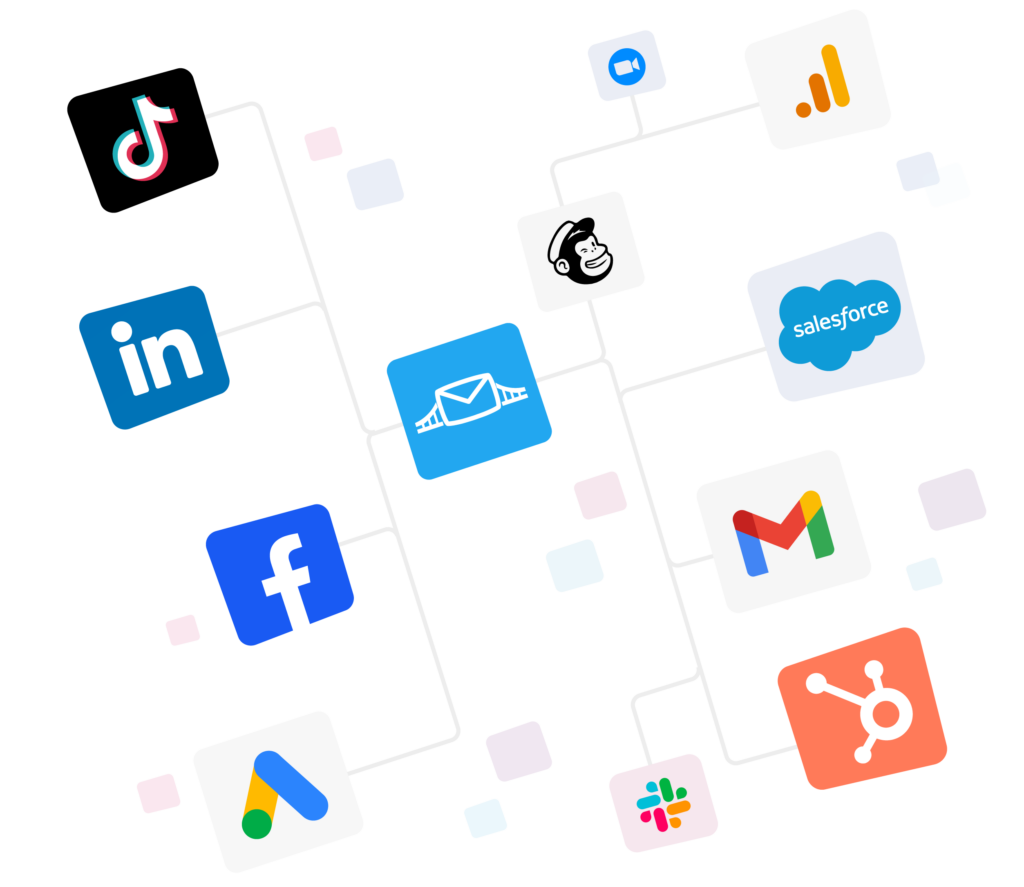
Here are a few of our popular integrations:


Instant form examples on Facebook and Instagram
Facebook instant form example by Cosentino Group
Cosentino Group is a Spanish company that makes sustainable design surfaces for homes and businesses. They wanted to generate more qualified leads.
To do this, they ran Meta lead ads with instant forms and turned on the mobile phone SMS verification feature.
After someone filled out the form, they received a text with a code. They had to enter that one-time code to confirm their phone number and finish the form.

This extra step helped filter out fake or low-intent leads, since only people who were really interested would complete the verification.
Results:
- 32% decrease in invalid phone numbers
- 2.2X increase in conversions compared to campaigns without SMS verification
By adding SMS verification to their instant forms, Cosentino got cleaner data, better leads, and stronger results from their Meta campaigns.
Facebook lead ad example by Jaguar Land Rover
Jaguar Land Rover wanted to generate more online leads for the Range Rover Sport in Italy, while also bringing down the cost per lead and reaching new audiences more efficiently.
To do this, they worked with their agency Hearts and Science Germany to test video lead ads built specifically for the Reels placement on Facebook and Instagram.
Instead of repurposing existing assets, the team created videos from scratch using mobile-first best practices. That meant vertical 9:16 format, audio on, a clear hook in the first few seconds, and visual storytelling that fit naturally in a Reels feed.
Each video included a Get Quote button that opened an instant form inside the app, pre-filled with the viewer’s contact details so the sales team could follow up straight away.
They ran an A/B test comparing two setups. One group saw the new Reels video lead ads alongside their usual ads.
The other saw their usual image lead ads only. Both groups targeted adults in Italy aged 35 and over, using prospecting audiences and an Advantage+ lookalike. Jaguar Land Rover also re-engaged people who had watched the video ads, and used Advantage+ campaign budget to automatically shift spend toward the best-performing ad sets in real time.
Results:
- 17% more online leads at a 15% lower cost per lead compared to image lead ads
- Nearly double the quality leads at a 48% lower cost per quality lead
- Higher incremental reach and engagement
This ad shows that building video ads that fit the Reels format rather than just resizing existing creatives made a real difference, both in volume and in lead quality.
But what about smaller brands? Do Facebook ads work for small businesses? Find out everything you need to know here.
GymNation’s instant form example on Facebook and Instagram
GymNation used ads that directed people to their website. However, they wanted to gather more high-quality leads at a lower cost. This leading gym chain was able to gain a 64% increase in leads by using Facebook and Instagram lead ads with instant forms. They also reduced their cost per lead by 39%.

They tested two types of lead ads:
- One opened to an instant form directly within Facebook or Instagram, where contact details were auto-filled.
- The other directed users to a form on their website.
Ads with instant forms on Facebook and Instagram brought in more leads at a lower cost. This is a testament to the effectiveness of keeping users within the platform for quicker and easier lead capture.
OBS Business School’s instant form advertising results
OBS Business School is a Spanish online institution offering MBAs and Master’s degrees to more than 45,000 students across 85 countries.
They wanted to generate more leads for their programs through Meta, but they also had a bigger question: were their Meta lead ads driving results beyond what they could directly measure?

They ran an Advantage+ lead ad campaign promoting their MBA and Master’s degree programs, using instant forms to capture leads directly inside Meta. To understand the full impact of those ads, they paired the campaign with a Meta Conversion Lift test using channel lift methodology.
This allowed them to measure whether people who saw their Meta lead ads were also more likely to convert through other channels like paid search and organic search, even when those conversions were not being directly attributed to Meta.
Results for people exposed to the Meta lead ad campaign:
- 60% lift in organic search leads
- 44% lift in paid search leads
- 30% lift in paid search sessions
- 12% lift in organic search sessions
What this shows is that the value of Meta instant form campaigns often goes beyond the leads you can see in Ads Manager.
People who saw the ads were significantly more likely to search for the school and convert through other channels too.
If you are running instant form campaigns and only measuring conversions inside Meta, you are likely undervaluing what those ads are doing.
Facebook instant form example by Phoenix Truck Driving School
Phoenix Truck Driving School ran Meta lead ads with a “Learn more” button that opened an in-app Instant Form on Facebook and Instagram.
The form auto-filled with the user’s contact details from their profile, reducing friction and making sign-ups faster. They then routed submissions to a fulfillment center to follow up and enroll prospects.

In an A/B test, they compared their usual complex, manually built lead campaign against an automated Meta Advantage+ leads campaign with a simplified setup. The Instant Form + Advantage+ approach delivered:
- 36% lower cost per lead
- 53% increase in total leads versus their usual manual campaign.
Facebook instant form example by GDL Spa
GDL Spa runs Remail Docce, an Italian brand that converts bathtubs into showers and completes over 100,000 installations a year.
They were already running lead ads with instant forms but wanted more qualified leads, meaning people who actually booked a sales appointment.

They tested their usual manual lead ad setup against an Advantage+ leads campaign, keeping the same creative, bidding and objectives across both. Each ad included a Learn More button that opened an instant form pre-filled with the viewer’s contact details.
They also connected their CRM via the Conversions API to optimise for conversion leads rather than just raw lead volume.
Results for the Advantage+ leads campaign compared to the manual setup:
- 75% more qualified leads
- 43% lower cost per qualified lead
- 5% lower cost per lead
If you are running lead ads with instant forms and have not tried Advantage+ leads yet, this is a solid case for testing it, especially if lead quality matters more to you than lead volume.
Facebook instant form example by Maserati
Maserati wanted to get more leads from Meta while bringing down the cost. They tested following Meta’s opportunity score recommendations across their lead ad campaign setup.
This meant switching to Advantage+ audience, using Advantage+ campaign budget, simplifying their account structure down to one campaign, and diversifying their ad creative.

They ran an A/B test against their usual lead ad campaign, targeting adults in Germany aged 18 and over.
Results compared to their usual campaign:
- 34% lower cost per lead
- 51% more leads
- 75% increase in reach
Opportunity score is worth checking if you have not used it before. It sits inside Meta Ads Manager and scores how well-optimised your campaigns are, then surfaces specific recommendations based on your setup.
For Maserati, acting on those recommendations made a significant difference across every metric that mattered.
Facebook and Instagram lead ad example by Tatil Tur
Tatil Tur is a Turkish travel company offering everything from budget getaways to luxury packages. Ahead of peak travel season, they ran a campaign combining lead ads with ads that clicked to WhatsApp and Instagram Direct, targeting adults aged 25 to 55 in major cities like Istanbul and Antalya.

The setup worked in two ways. People who clicked through a messaging ad were connected directly to a live travel agent on WhatsApp or Instagram Direct. People who submitted their details through a lead ad got an automated follow-up message, then a second outreach 24 hours later.
Results compared to previous campaigns:
- 3.3X higher sales from ads that click to Instagram Direct
- 2.9X higher sales from ads that click to WhatsApp
- 36% lower cost per click
- 39% lower cost per lead
This is a good example of using lead ads as one part of a wider conversation-based funnel, where the form captures contact details and messaging handles the follow-up.
Benefits of integrating Meta instant forms with LeadsBridge
Automation is the backbone of your lead generation strategy. Integrating Meta instant forms with LeadsBridge is an intelligent way to boost your lead generation efforts.
When you create an interconnected data technology stack, you can automate the process of moving leads from Meta (Facebook and Instagram) to your CRM or email marketing tools. This offers much more than meets the eye.
Here are the top 5 benefits of connecting LeadsBridge with Meta:
1. Instant data updates: You’ll get your leads in real time, allowing you to follow up with them quickly.


2. Save time: You can automate repetitive tasks so your team can focus on more important work.
3. Reduce errors: No more manual data entry, which lowers the risk of mistakes.
4. Better targeting: You can improve your conversion rates by using the conversion leads performance goal or Advantage+ Leads campaigns. Both work best when your CRM is connected, because Meta uses the data you send back to find more people like your best leads.

5. Track customer journeys: You’ll be able to build a connected system where you can easily see the full customer journey with all your data in one place.
6. Send Instagram and Facebook leads to email for free. Learn more here.

You can use LeadsBridge to create Facebook lead ads-CRM integrations and Instagram lead ads-CRM integrations. This makes your marketing campaigns even more efficient by allowing you to access your lead data as it comes in.
FAQs
What are instant forms on Facebook?
Instant forms on Facebook are lead capture forms that open directly inside the Facebook app when someone clicks your ad. The person never has to leave Facebook to fill them out.
Meta pre-fills the form with details from their account, like their name, email address, and phone number, which makes the process faster and reduces the chances of them dropping off.
You can customize the questions, add a privacy policy link, and set up a follow-up message. They are built and managed inside Meta Ads Manager.
Where to find instant forms on Facebook?
You can find your instant forms in a few places. When you are setting up a lead ad in Meta Ads Manager, you will see the instant forms option at the ad level, where you can create a new form or choose an existing one.
You can also access all your forms through the Forms Library, which is available in Meta Business Suite under Advertise. If you have a recent version of Ads Manager, you may also be able to manage forms directly at the ad level without going to Business Suite.
Meta lead ads instant forms: how do they work?
When someone sees your lead ad on Facebook or Instagram and clicks the call-to-action button, an instant form slides open without taking them to another website.
The form pulls in their saved information from Meta, so they usually just need to review it and hit submit. You can add custom questions, turn on SMS verification or work email filtering to improve lead quality, and connect the form to a CRM through a tool like LeadsBridge so leads arrive in real time.
The form data is stored in Ads Manager and can be downloaded manually, but most advertisers automate that step with a direct integration.
Final thoughts
Meta instant forms are easy to use. But the reason they’ve become so popular is that they’re a powerful way to collect valuable lead data. As we saw with the previous instant form examples, they can also help you get more conversions and understand your customers better.
Once you’ve got your leads, managing the data is just as important. That’s where LeadsBridge comes in. Connecting lead ads allows you to easily sync your lead data with the rest of your marketing tools.
With just a few clicks, you can automate your workflows and let LeadsBridge handle the data for you.