
TL;DR
- Marketing automation integration connects your tools so data flows automatically between your CRM, ad platforms, email, and social channels.
- The highest-impact integration use cases are CRM-to-ads (audience sync), lead sync from ad platforms to CRM, and social media to marketing automation.
- Marketing automation tools with closed-loop CRM integration are a top driver of top-quartile performance.
- LeadsBridge provides 380+ pre-built integrations for Meta, Google, LinkedIn, and TikTok, and hundreds of other marketing and advertising tools.
Your CRM knows everything about your leads. Your ad platform is spending its budget to reach them. Your email tool is nurturing them. So why are all three working as if the others don’t exist?
This is the defining problem of modern marketing operations: teams have more tools than ever, but those tools aren’t connected.
The costs show up in slower follow-up, wasted ad spend, and incomplete reporting.
Marketing automation integration is what closes that gap.
In this guide, we cover what it is, where it adds the most value, how to implement it well, and how LeadsBridge helps connect the specific systems that matter most for lead generation and paid advertising.


What is marketing automation integration?
Marketing automation integration just means connecting your marketing automation platform with the other tools your business uses.
That includes your CRM, ad platforms, social media channels, landing page tools, and analytics systems. The goal is simple: data moves automatically between them, without someone having to export files, import spreadsheets, or type the same information twice.
Here’s what that looks like:
- Someone fills out a Facebook lead ad, and that lead shows up in your CRM right away.
- Then an email sequence starts automatically.
- A contact becomes “sales-ready” in your CRM, and they’re automatically added to a retargeting audience in Google Ads.
- Your sales team closes a deal offline, and that conversion data gets sent back to Meta, so the algorithm learns who actually buys.
When not connected, every tool works like its own separate island. However, by integrating them, your marketing stack works like one connected system.
One customer action can trigger the right response across email, ads, sales, and reporting at the same time.
Marketing automation delivers an average return of $5.44 for every $1 spent, while top-performing programs can reach more than $8.70 per dollar.
The difference usually comes down to how well the CRM is integrated with your funnel, how mature the lead scoring is, and how cleanly audiences are synced across platforms.

Marketing automation integration use cases
A good marketing automation strategy should aim to connect almost every part of your tech stack.
But for most marketing and demand gen teams, three integrations usually create the biggest impact right away:
- CRM integration
- Ad platform integration
- Social media integration
| Use Case | What Gets Connected | Key Benefit | LeadsBridge Role |
| CRM integration | Marketing automation to/from CRM | Unified lead data, automated handoffs, closed-loop reporting | Syncs lead fields, status updates, and scores bidirectionally |
| Advertising integration | CRM and email to/from Meta, Google, LinkedIn, TikTok | Real-time custom audiences, conversion tracking, suppression | Audience Sync + Conversion Sync across 380+ ad integrations |
| Social media integration | Social lead forms to/from CRM and marketing automation | Instant lead capture, no manual exports, immediate nurture | Lead Sync from Facebook, Instagram, LinkedIn, TikTok lead forms |
Marketing automation CRM integration

Your CRM shows who a lead is and where they are in the sales process.
Your marketing automation platform shows what they’re doing. For example: did they open emails, visit pages, attend webinars, or view key content?
When you connect the two, sales and marketing get one shared view of each lead. There are different marketing automation examples and use cases, of course.
Sales can see a lead’s marketing activity before reaching out. Marketing can use CRM data to remove existing customers from prospect campaigns, speed up follow-up for hot leads, and trigger the right next steps.
LeadsBridge syncs data both ways: new leads go into the CRM, CRM updates flow back into campaigns, and leads can be routed to the right sales rep automatically.
That means fewer manual handoffs, cleaner data, and faster follow-up. It also gives you the foundation for run CRM retargeting.


Marketing automation integration with advertising tools

Your ad platforms and CRM should be sharing data in real time.
Ad platforms collect clicks, conversions, and audience signals. Your CRM tracks warm leads, buyers, and high-intent contacts. When those systems are connected, your audiences stay fresh automatically.
Without integration, teams often export CRM lists, upload them to Meta or Google, wait for matching, and repeat the process manually. By then, the audience is already outdated.
With CRM integration, leads can enter or leave the right ad audience as soon as their CRM status changes.
Offline conversions can also be sent back to platforms like Meta, Google, and LinkedIn, so campaigns optimize toward users who resemble your actual buyers.
LeadsBridge makes this automatic with Audience Sync and Conversion Sync. It keeps CRM audiences updated through integrations such as LinkedIn Matched Audiences, Google Customer Match, Facebook custom audiences, and TikTok Conversions API.
These connections basically send your conversion data back to the platform through native APIs.


Marketing automation social media integration

Social platforms like Meta, LinkedIn, and TikTok let people submit lead forms without leaving the app.
That makes signups easier, but the real problem is what happens after the form is submitted.
Without integration, leads sit inside the platform until someone exports, cleans, and uploads them into a CRM or email tool. That delay can kill intent fast.
With social media integration, new leads move straight from the form into your CRM or marketing automation platform in real time.
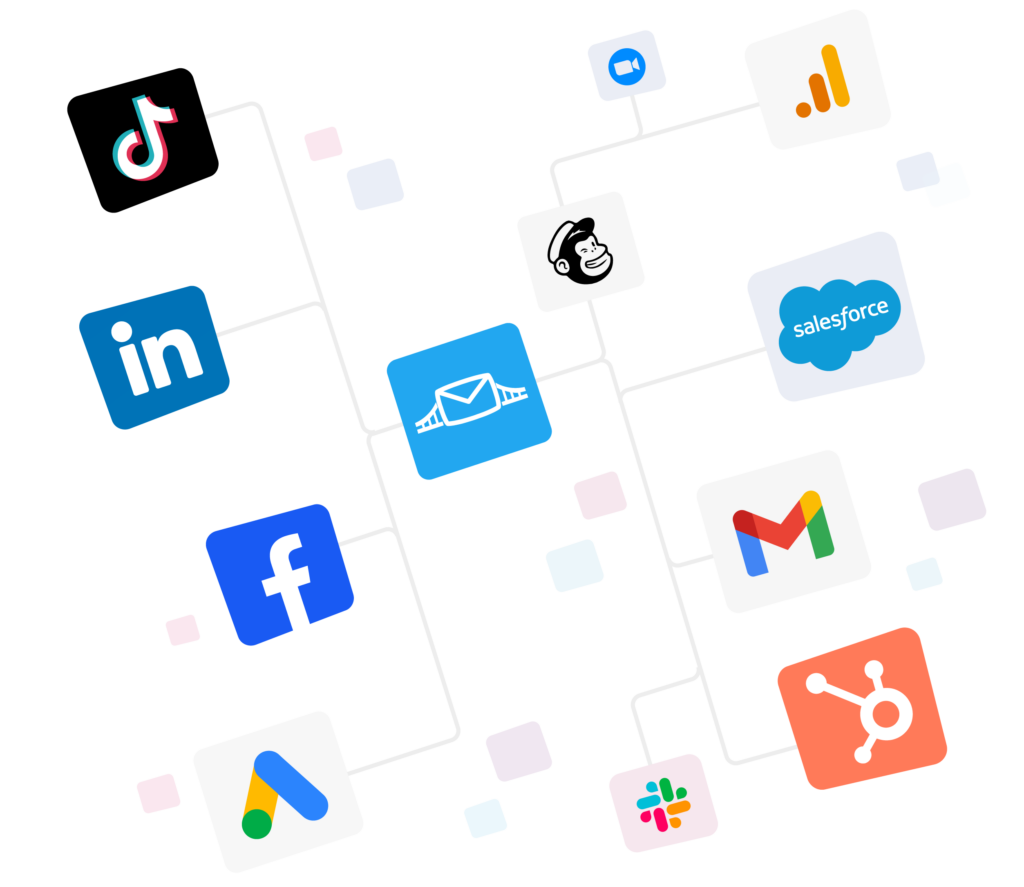
LeadsBridge Lead Sync connects Facebook lead ads, Instagram lead ads, LinkedIn Lead Gen Forms, and TikTok Lead Generation to over 380 CRM and marketing automation tools.
So when someone submits a form, they’re added instantly, your welcome sequence starts, and lead scoring begins automatically.


Top 7 marketing automation integration best practices
Manual workarounds can make the real cost of a tool 2–2.5 times higher than its license fee.
And the cost is not just financial. According to McKinsey’s 2025 martech research, 47% of marketers say stack complexity and integration issues stop them from getting full value from the tools they already pay for.
So getting your automation set up right matters a lot. Here are some tried-and-tested ways you can do that:
- Audit your current integrations first: Before buying another tool, check how well your existing tools already share data. A broken stack usually just needs cleaner connections.
- Choose one source of truth for each data type: Your marketing automation platform should own campaign engagement. Your ad platforms should receive audience data from the CRM, not manage it separately.
- Use real-time sync for high-intent actions: Daily syncs are fine for basic lists. But lead form submissions, pricing page visits, and webinar signups should move instantly, so sales and nurture campaigns can respond automatically while interest is still fresh.
- Build two-way data flows: Don’t just send leads from ads to your CRM. Send conversion data back to platforms like Meta and Google too, so they can optimize for real outcomes.
- Always include suppression lists: Exclude existing customers, recent converters, unsubscribes, and do-not-contact contacts from your ad audiences. This prevents wasted spend and bad customer experiences.
- Map fields before going live: Field names often vary between tools. Test them first so data doesn’t sync into the wrong place or arrive blank.
- Prepare your data for agentic AI: In 2026, tools like HubSpot Breeze, Salesforce® Agentforce, and Marketo’s AI layers are making more decisions across the stack. They need clean, connected data to work. Strong integration is what makes the next wave of marketing automation possible.
FAQs
1. What is marketing automation integration?
Marketing automation integration is the connection between your marketing automation platform and the other tools in your stack, such as your CRM, ad platforms, social media channels, and analytics tools.
It lets data move automatically between systems, so your team does not have to rely on manual exports, imports, or duplicate entry.
2. How can marketing automation help manage social media campaigns?
Marketing automation helps manage social media campaigns in two main ways: lead capture and audience management.
For lead capture, submissions from Facebook, Instagram, LinkedIn, and TikTok forms can sync directly into your CRM or email platform. That means follow-up sequences can start as soon as someone submits a form.
For audience management, CRM and email data can be used to update social media ad audiences automatically. This includes retargeting audiences, lookalike audiences, and suppression lists for existing customers or recent converters.
3. What is the difference between CRM and marketing automation?
A CRM is mainly used by sales teams. It stores contact records, tracks deal stages, manages pipeline activity, and keeps customer history organized.
Marketing automation is mainly used by marketing teams. It automates campaigns like email sequences and lead nurturing, lead scoring, and ad audience updates.
The CRM shows who the lead is and where they are in the sales process. Marketing automation shows what they are doing and helps move them toward conversion.
They work best together. When integrated, CRM data improves campaign targeting, and marketing engagement data helps sales follow up at the right time.
Final thoughts
A disconnected martech stack limits what your campaigns can do.
Manual exports slow teams down and create room for errors. Audiences that update weekly waste ad spend. Conversions that never get sent back to ad platforms leave algorithms optimizing with incomplete data.
The case for marketing automation integration is simple: the tools you already use work better when they share data reliably.
LeadsBridge helps advertisers connect the pieces. With 380+ integrations across Meta, Google, LinkedIn, and TikTok, plus dedicated tools for lead sync, audience sync, and conversion sync, it keeps campaign data moving automatically at scale.
Explore LeadsBridge integrations for your marketing stack.