
Are people searching for the exact cars you sell, but your dealership isn’t showing up when it matters most?
Google’s Vehicle ads solve that by placing your actual inventory with photos, a price tag, and even mileage right on the search results page.
It can be scanned (by the user’s eye) in less than a couple of seconds. Also, it sends interested people straight to the right VDP to call, message, or book.
They work so well because the click is pre-qualified (people see the details before they tap).
Additionally, Google can automatically match searches to the most relevant vehicles.
What more does a car dealership need to run great ads? (well, besides a good ad creative and ad copy, of course!)
This guide breaks down the best ad types and strategies to use Google Ads for car dealerships.
In addition, it covers the smartest way to feed lead and sales results back into Google so the system learns what actually sells through your automotive ads.


How Google Ads for car dealerships work
Google’s vehicle ads are basically Shopping ads for cars. Instead of writing a bunch of keywords and ad text for every model, you upload your live inventory (your actual cars), and Google builds ads from that data.

These ads usually show when someone is already shopping, like searching specific makes and models, comparing prices, or looking for a vehicle near them.
The ad shows a photo and key facts, including the make, model, price, mileage, and dealer name. This way, the shopper can filter out “not a match” before they click.
Since launching in 2022 and expanding to places like the UK with broad availability from October 2024, this format has become one of the most direct ways to turn searches into serious leads.
What powers Google’s vehicle ads?
Vehicle ads run through Performance Max with a vehicle feed. What that really means is that Google’s system can choose where to show your inventory across Google surfaces, based on what it thinks will drive results.
If you attach a vehicle feed but don’t add other creative assets, such as headlines, descriptions, extra images via asset groups, or auto asset creation, your campaign can end up showing only on Google Search.
Some feed-based reach expansion (like Display) is also rolling out in specific countries. This is what Google had to say about this:

Why should you run Google Ads for car dealerships?
Vehicle shoppers aren’t interested in an ad. They are interested in a specific car. Google’s vehicle ads let you show real inventory (photo, price, mileage, etc.) right when someone is actively looking, which is about as close to ready-to-buy as online gets.
Here are the top benefits of running Google Ads for car dealerships:
1. Gets you more qualified leads
People see the price, mileage, and the exact vehicle before they click. That filters out a lot of just-browsing clicks, so the leads you get are more of the marketing-qualified type.
2. Accommodates omnichannel goals
Google can optimize for actions like Google Ads lead form submissions and in-person visits, so you’re not stuck measuring success only by website forms.
You can also sync your lead data to your CRM to boost lead generation by automating follow-ups and turning integrations into faster conversions.


3. Allows automated targeting
Google matches shoppers to your most relevant listings based on what they search. That’s huge when you have lots of trims, years, and used inventory that changes daily.
4. Less wasted spend on wrong clicks
Normal search ads can burn money on vague searches like ‘best SUV’ or people looking for info. Inventory ads self-qualify shoppers because the details are upfront. So you’ll end up paying for fewer low-intent clicks.
5. Your inventory stays advertised even as it changes
Dealers lose time and sales because inventory changes faster than their car dealership ads. Feed-based vehicle ads can keep pace, as long as your feed and VDPs are clean and updated. You can do this through automation.
6. Better insight into what actually sells
You can learn which campaigns generate high-intent leads for their dealership. That helps you make smarter choices on buying, pricing, and which units to push (especially aging inventory).
Are Google Ads for car dealerships available to everyone?
No. Vehicle ads are not for everyone. Google puts three big gates in front of you: who you are, what you’re selling, and where you’re located.
- Vehicle ads are meant for real businesses that sell cars: dealers, retailers, aggregators, and OEMs (Original Equipment Manufacturer). Google is trying to keep shoppers from getting baited by random listings.
- Vehicle ads are currently available in the US, Canada, Australia, the UK, the Netherlands, and France, plus a limited beta in select countries.
- These ads are only for non-commercial passenger vehicles, like cars and pickup trucks (utes in Australia).
- What’s not allowed includes commercial vehicles, farm vehicles, buses, 2-wheelers (like motorcycles), trains, boats, airplanes, or outdoor utility vehicles.
Everyone else is either blocked or has to wait for expansion/beta. And even if you’re an eligible dealer in an eligible country, you still need to follow inventory rules.
Best types of Google Ads for car dealerships
If you’re trying to sell cars, you want ad types that match how people actually shop. The user’s car-buying journey usually starts with a search, goes through stages of comparison. People then come back to what they liked, then finally call or visit.
To accompany them through these stages, you need to use the right ad for the right funnel stage.
Here are the best types of Google Ads for car dealerships, and when they’re worth your money.
1. Vehicle ads (Performance Max with a vehicle feed)
This ad helps you show the exact car to the high-intent shoppers on Google, which is perfect because these people are already comparing cars. Your ads pull straight from your inventory feed and show photos, price, mileage, etc.
Make sure to add assets if you want a broader reach across formats and networks. These are the basics of your campaigns’ structure, like headlines, descriptions, and extra images via asset groups or auto asset creation.
If you attach a vehicle feed but don’t add extra assets, Google will mostly show these only on Google Search.
2. Search campaigns (aka, classic text ads)
Search is where buyers type exactly what they want through search queries. To tap into search campaigns for your car dealership’s Google Ads, you need to run a separate ad group.

Some examples include service-related keywords like ‘brake pads near me’. Most dealers ignore these searches, which are disguised as an intent to buy a new car.
Or finance-related queries such as ‘bad credit car loan’ and trade-in-related search queries like ‘value my trade’.
Learn more about discovery campaigns here.
3. Remarketing campaigns
Most people don’t buy on the first visit. Remarketing brings them back after they looked at your site.
You can either use regular remarketing to say something like ‘Come back and book a test drive.’
Or do better and use dynamic remarketing. These campaigns show people the exact items they viewed, using a feed with IDs, images, and prices.

4. Video (YouTube)
Video ads are great for shoppers who are still deciding or need to build trust before they show up.
They are best for campaigns like walkarounds, ‘why buy here,’ trade-in process, service specials, and genuine customer stories.
You can also use them to retarget people who visited VDPs with a short walkaround and a ‘schedule a test drive’ call-to-action.
Vehicle Detail Page or VDP is the individual listing page for a specific car on your website.
5. Display campaigns
Want to stay visible while people comparison shop on other sites? That’s what Display is for.
Display is usually not great for targeting a cold audience, because it would get lots of low-intent clicks. But it can be useful when it’s remarketing-focused.
Also, avoid broad targeting that dumps your ads on junk apps and sites. And that’s where you’d lose budget.
Top 4 strategies to create successful Google Ads for car dealerships
Looking for the top car dealership strategies? Here are must-have strategies when running ads through Google.
1. Run vehicle ads through Performance Max
Vehicle ads perform well because they show the exact car (photo, price, mileage) when someone is already shopping. But your results can only be as good as your feed.
So update your inventory feed at least daily (hourly if you can), and set a weekly routine to spot-check on your pricing, actual car availability, mileage mentions, photos, and VIN and ID consistency.
2. Use geo-targeting with strong local signals
Most dealership sales happen within a realistic driving distance. This is a Google Ads best practice that can save you money.
Start with a 15–30-mile radius, then split into zones (0–10, 10–20, 20–30). Then, bid more aggressively closer to the store.
Also, make sure you have an updated Google Business Profile and location-focused search terms. For instance, city + model + dealer keywords.
3. Build buyer intent campaigns and prevent budget waste with negative keywords
Keywords aren’t always used by buyers. The very same query of ‘used cars’ can be typed by researchers, service, jobs, parts, and even rentals. Instead, you want buyers.
Make one campaign (or ad group) for high-intent searches like ‘2022 Accord for sale,’ ‘book test drive,’ ‘trade-in value,’ ‘get pre-approved.’
Then add negative keywords like free, rental, repair, problems, recall, manual pdf, review (and whatever you see wasting spend in your Search Terms report).
4. Use integrations to automate your data management
This is a way too common dealership problem. They start with Google Ads and generate leads, while they use their automotive CRM to close deals. So far, so good?
These seemingly separate processes don’t allow Google to learn which car buyer leads actually converted to sales. So the algorithm optimizes for form fills over buyers, because they are easier to convince.
That’s how you may be getting a lot of leads and not many sold cars.
You want to get higher-quality leads instead.
An automated data bridge connects your systems so each lead can be tracked from click to lead and appointment, to the final sold (or not sold) tag.
And that result gets sent back into Google Ads as an offline conversion and enhanced conversion for leads.
How to create an interconnected data system?
Setting up a streamlined automotive lead management system?
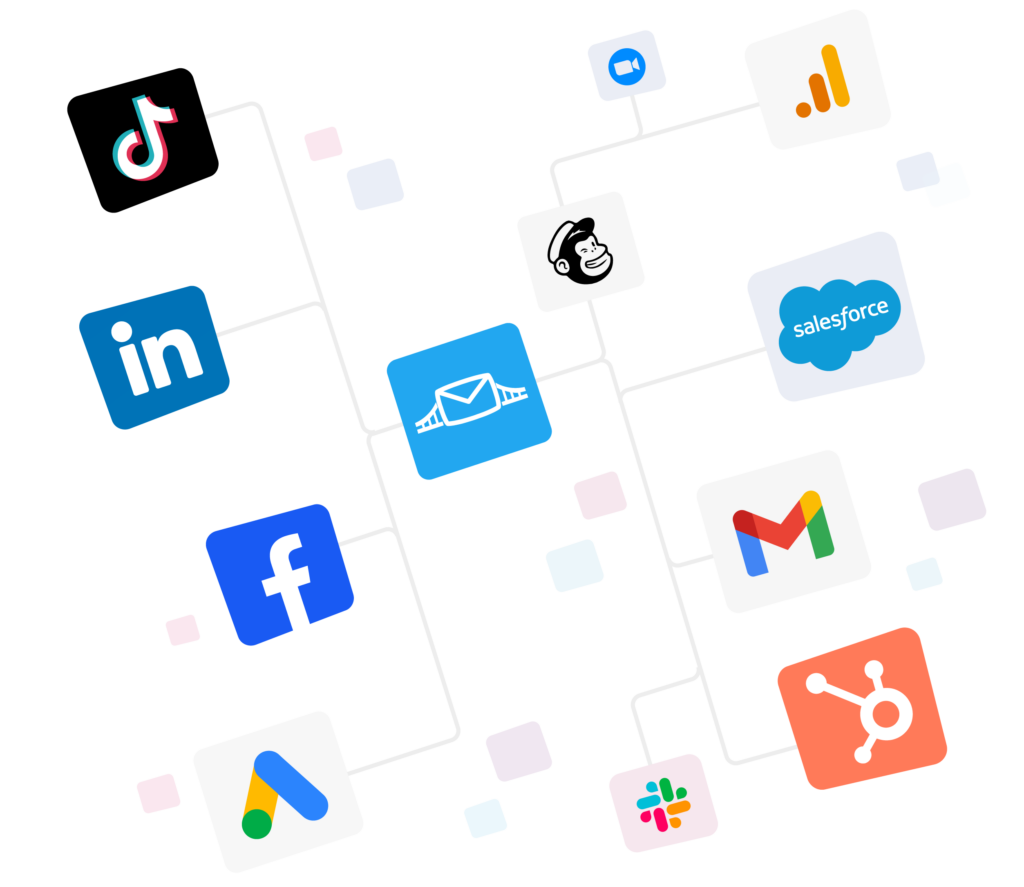
LeadsBridge is part of Google Partners and can help you connect Google Ads lead form extensions directly to your CRM and other tools, so leads sync automatically instead of sitting in a CSV.
You can set up integrations to:
- Automate your lead sync by connecting the Google lead form to your automotive software or CRM instantly. From there, you can also streamline your lead routing to sales, email, and SMS, as well as lead scoring and other follow-up sequences.


- Build more accurate audience lists by keeping Customer Match lists fresh automatically. This means including shoppers in the right lifecycle stage, excluding “already bought” customers, and keeping your retargeting straightforward.

Final words
If a shopper reaches out and it takes hours to respond, or the lead lands in the wrong inbox, you’re basically paying without getting a return.
Make your follow-up part of the campaign. Route leads instantly, aim for replies in minutes, and track what happens next in your CRM (appointment set, showed, sold). That’s the difference between getting leads and selling cars.
To close the loop even tighter, use integrations to connect your forms, CRM, and autoresponders so Google can optimize toward the outcomes that actually matter.
Explore all LeadsBridge’s dedicated automotive integrations here.